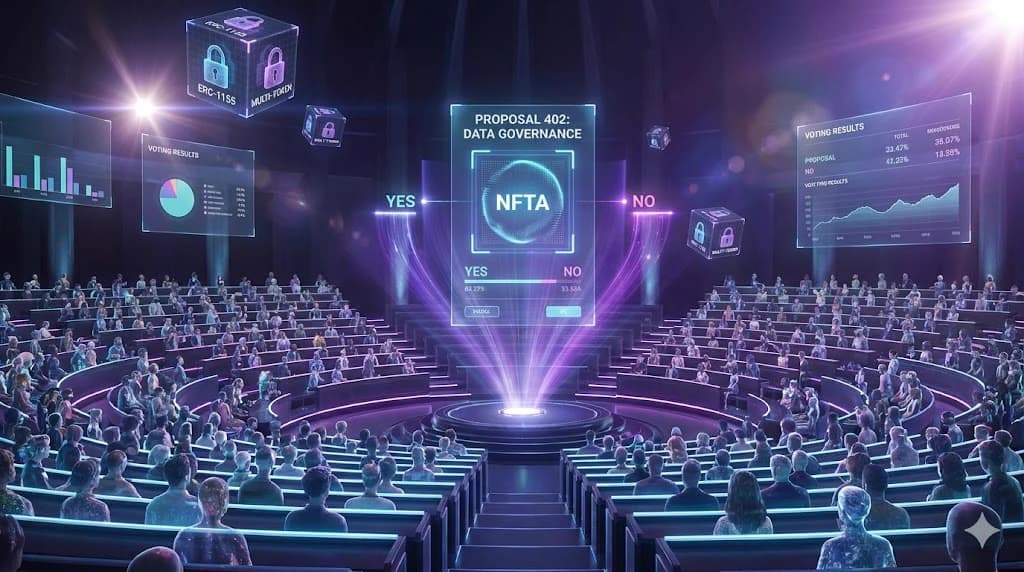
Economic · 경제 / NFT + Governance
Data NFT & DAO Platform
1인 개발로 진행한 데이터 자산 토큰화(ERC-1155) + DAO 거버넌스 컨셉 프로젝트입니다.
- 역할
- 1인 개발 · 아키텍처, 구현, 운영 도구
- 기간
- 2022.05 - 2022.07
- 맥락
- Razen
1인 개발로 진행한 데이터 자산 토큰화(ERC-1155) + DAO 거버넌스 컨셉 프로젝트입니다.
무엇이 시스템을 어렵게 만들었는가.
유동성, 거버넌스, 창작자 인센티브를 동시에 만족하는 구조가 필요했습니다.
어떤 경계와 흐름으로 답했는가.
멀티토큰 자산 모델과 DAO 의사결정 플로우를 설계하고, 체인 선택/트레이드오프를 문서화했습니다.
Data NFTization & DAO Platform
Developed an innovative platform that transforms data assets into NFTs and implements a DAO-based governance system for NFT sales participation.
System Architecture
Data Asset Tokenization
Designed a comprehensive system to convert data into tradable NFT assets with verifiable ownership and usage rights.
Supported Data Types:
- Research datasets
- Analytics reports
- Market intelligence
- User behavior data
- Proprietary algorithms
ERC-1155 Multi-Token System
Implemented ERC-1155 standard for efficient multi-token management.
// Data NFT Multi-Token Contract
contract DataNFT is ERC1155, Ownable {
struct DataAsset {
string dataHash; // IPFS hash of encrypted data
string metadataURI; // Metadata location
uint256 totalSupply; // Maximum editions
uint256 price; // Base price per token
address creator; // Data provider
uint256 royaltyPercent; // Royalty for creator
bool transferable; // Can be resold
}
mapping(uint256 => DataAsset) public dataAssets;
uint256 public nextTokenId;
function mintDataNFT(
string memory dataHash,
string memory metadataURI,
uint256 supply,
uint256 price,
uint256 royaltyPercent
) external returns (uint256) {
uint256 tokenId = nextTokenId++;
dataAssets[tokenId] = DataAsset({
dataHash: dataHash,
metadataURI: metadataURI,
totalSupply: supply,
price: price,
creator: msg.sender,
royaltyPercent: royaltyPercent,
transferable: true
});
_mint(msg.sender, tokenId, supply, "");
emit DataAssetMinted(tokenId, msg.sender, dataHash);
return tokenId;
}
}
DAO Governance System
NFT Sales Participation
Implemented a unique DAO mechanism where token holders vote on which data NFTs to list for sale.
// DAO Governance Contract
contract DataNFTDAO {
struct Proposal {
uint256 tokenId; // NFT to be listed
uint256 proposedPrice; // Suggested sale price
uint256 votesFor;
uint256 votesAgainst;
uint256 deadline;
bool executed;
mapping(address => bool) hasVoted;
}
mapping(uint256 => Proposal) pub proposals;
uint256 public proposalCount;
uint256 public constant QUORUM = 30; // 30% participation required
uint256 public constant APPROVAL_THRESHOLD = 60; // 60% approval needed
function createProposal(
uint256 tokenId,
uint256 proposedPrice
) external returns (uint256) {
require(governanceToken.balanceOf(msg.sender) > 0, "No voting power");
uint256 proposalId = proposalCount++;
Proposal storage proposal = proposals[proposalId];
proposal.tokenId = tokenId;
proposal.proposedPrice = proposedPrice;
proposal.deadline = block.timestamp + 7 days;
emit ProposalCreated(proposalId, tokenId, proposedPrice);
return proposalId;
}
function vote(uint256 proposalId, bool support) external {
Proposal storage proposal = proposals[proposalId];
require(block.timestamp < proposal.deadline, "Voting ended");
require(!proposal.hasVoted[msg.sender], "Already voted");
uint256 votingPower = governanceToken.balanceOf(msg.sender);
if (support) {
proposal.votesFor += votingPower;
} else {
proposal.votesAgainst += votingPower;
}
proposal.hasVoted[msg.sender] = true;
}
function executeProposal(uint256 proposalId) external {
Proposal storage proposal = proposals[proposalId];
require(block.timestamp >= proposal.deadline, "Voting ongoing");
require(!proposal.executed, "Already executed");
uint256 totalVotes = proposal.votesFor + proposal.votesAgainst;
uint256 totalSupply = governanceToken.totalSupply();
require(
totalVotes * 100 / totalSupply >= QUORUM,
"Quorum not reached"
);
require(
proposal.votesFor * 100 / totalVotes >= APPROVAL_THRESHOLD,
"Proposal rejected"
);
proposal.executed = true;
marketplace.listNFT(proposal.tokenId, proposal.proposedPrice);
}
}
NFT Royalty System
Perpetual Creator Rewards
Designed sophisticated royalty distribution ensuring creators benefit from secondary sales.
contract RoyaltyManager {
struct RoyaltyInfo {
address recipient;
uint256 percentage; // Basis points (100 = 1%)
}
mapping(uint256 => RoyaltyInfo[]) public royalties;
function setRoyalties(
uint256 tokenId,
address[] memory recipients,
uint256[] memory percentages
) external onlyCreator(tokenId) {
require(recipients.length == percentages.length, "Length mismatch");
uint256 totalPercent = 0;
for (uint256 i = 0; i < percentages.length; i++) {
totalPercent += percentages[i];
royalties[tokenId].push(RoyaltyInfo({
recipient: recipients[i],
percentage: percentages[i]
}));
}
require(totalPercent <= 2000, "Max 20% royalty");
}
function distributeRoyalties(uint256 tokenId, uint256 salePrice)
internal
{
RoyaltyInfo[] storage royaltyInfo = royalties[tokenId];
for (uint256 i = 0; i < royaltyInfo.length; i++) {
uint256 amount = (salePrice * royaltyInfo[i].percentage) / 10000;
payable(royaltyInfo[i].recipient).transfer(amount);
}
}
}
Royalty Features:
- Multi-recipient support (split royalties among collaborators)
- Customizable percentages per NFT
- Automatic distribution on every sale
- Immutable once set to ensure trust
Blockchain Platform Research
Multi-Chain Evaluation
Conducted comprehensive analysis of blockchain platforms for optimal project requirements:
Evaluated Platforms:
- Ethereum: High security, established ecosystem, but expensive gas
- Polygon: Low fees, Ethereum compatibility, good for scaling
- Klaytn: Asian market focus, fast finality, moderate fees
- BSC: Low cost, wide adoption, centralization concerns
- Solana: High throughput, low cost, but different programming model
Selection Criteria:
- Transaction cost vs. throughput
- Smart contract capabilities
- Developer ecosystem
- Target market accessibility
- Security and decentralization
Final Selection: Ethereum + Polygon (L2)
- Ethereum for high-value assets
- Polygon for frequent transactions and lower-value data sets
Full System Design
Architecture Components
┌─────────────────────────────────────────────┐
│ Frontend (React + Web3.js) │
│ - Data Upload UI │
│ - DAO Voting Interface │
│ - NFT Marketplace │
└────────────────┬────────────────────────────┘
│
┌────────────────▼────────────────────────────┐
│ Backend API (Node.js) │
│ - Data Encryption Service │
│ - IPFS Integration │
│ - Blockchain Event Listener │
└────────────────┬────────────────────────────┘
│
┌────────────────▼────────────────────────────┐
│ Smart Contracts (Solidity) │
│ ├─ DataNFT (ERC-1155) │
│ ├─ DataNFTDAO (Governance) │
│ ├─ Marketplace (Trading) │
│ └─ RoyaltyManager (Distribution) │
└──────────────────────────────────────────────┘
Data Flow
- Upload: User uploads data → Backend encrypts → Stores on IPFS
- Mint: User mints NFT with IPFS hash → Smart contract records ownership
- Propose: Token holder proposes listing → DAO contract creates proposal
- Vote: Community votes on proposal → Votes recorded on-chain
- Execute: If approved, NFT listed on marketplace
- Purchase: Buyer purchases → Royalties auto-distributed → Data access key transferred
Technical Achievements
| Component | Implementation |
|---|---|
| Token Standard | ERC-1155 multi-token |
| Governance | DAO-based approval system |
| Royalties | Multi-recipient, perpetual |
| Data Storage | IPFS + encryption |
| Access Control | Cryptographic key management |
| Platform Research | 5+ blockchain platforms evaluated |
